Are Employers Willing to Hire People on Suboxone?
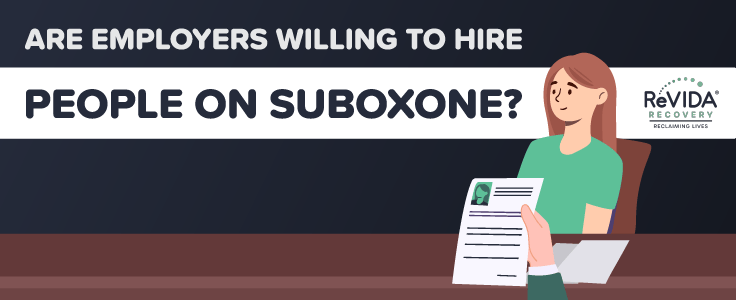
Fear about employment is one of the most common reasons people hesitate to start or continue medication-assisted treatment. Many patients worry that taking Suboxone® will quietly close doors, limit job options, or follow them forever through background checks and drug testing.
The reality is far more grounded. Most employers will hire someone prescribed Suboxone® and never know they’re taking it. When Suboxone® is prescribed legally and taken as directed, federal protections apply to most employers, and standard hiring practices usually don’t involve testing for it.
In West Virginia, access to treatment remains a significant part of the public health landscape. In 2023, the state had the highest buprenorphine dispensing rate in the country. For patients who are working or trying to return to work, that reality often comes with quiet questions about stigma, privacy, and whether treatment will limit their future.
At ReVIDA® Recovery, patients across East Tennessee and Southwest Virginia, including Johnson City and Knoxville, regularly balance outpatient treatment with work, family responsibilities, and rebuilding financial stability. Understanding how employment, drug testing, and the law intersect can reduce fear and help people move forward with clarity.
Table of Contents
Functionality: Can You Actually Work on Suboxone?
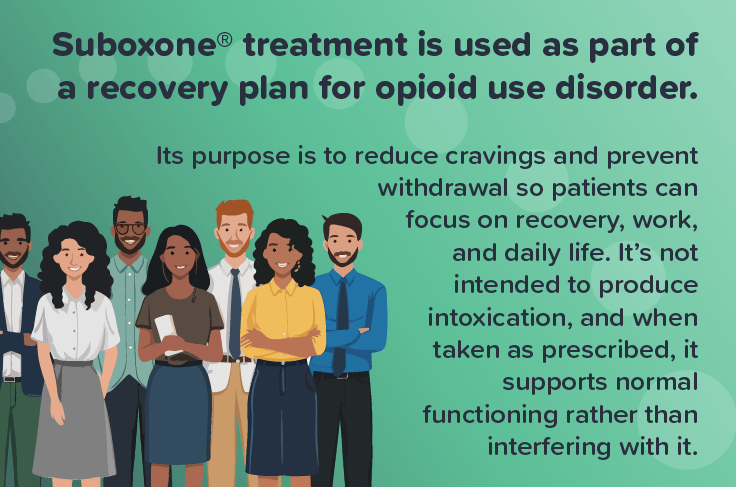
Suboxone® treatment is used as part of a recovery plan for opioid use disorder. Its purpose is to reduce cravings and prevent withdrawal so patients can focus on recovery, work, and daily life. It’s not intended to produce intoxication, and when taken as prescribed, it supports normal functioning rather than interfering with it.
Stabilization vs. Intoxication
A common misconception is that Suboxone® impairs a person’s ability to function at work. In reality, Suboxone® is designed to support stability, not intoxication. Once a patient is medically stabilized, it does not create a euphoric high.
Many people receiving Suboxone® maintain demanding careers, manage complex responsibilities, and return to consistent daily routines.
Compared to active opioid use, patients often report improved concentration, emotional steadiness, and the ability to plan ahead. Recovery doesn’t mean being sedated or disconnected. It means having the capacity to show up reliably.
Physical, Cognitive, and Professional Functioning
When patients are stable in treatment, work performance often improves because life becomes more predictable.
Common professional improvements reported by patients include:
- More consistent attendance and punctuality
- Fewer disruptions tied to withdrawal or instability
- Improved focus and follow-through
- Increased confidence returning to responsibility
For many people, the biggest workplace challenge isn’t performance. It’s privacy. Concerns about stigma or misunderstanding often create more anxiety than the job itself.
The Law: Your Rights and Protections While Taking Suboxone
Opioid use disorder is protected under the Americans with Disabilities Act (ADA) when a person is not currently using illicit substances. This means, with certain exceptions, employers are required to evaluate candidates based on their ability to perform the job, not assumptions about treatment.
An employer generally can’t refuse to hire someone solely because they’re prescribed medication as part of recovery, as long as the medication doesn’t impair job performance and is used legally. That protection applies to hiring, advancement, and continued employment.
While legal protections exist, discrimination can be difficult to prove. Because of this, many candidates choose a “need-to-know” approach and avoid disclosing medical information unless required.
Recent policy discussions around addiction treatment and federal oversight haven’t removed ADA protections for people in recovery. As of this writing, legally prescribed treatment remains protected.
Important Exceptions to the Law
Some roles have additional scrutiny due to safety regulations. Jobs that may involve additional barriers include:
- Positions governed by the Department of Transportation or aviation regulations
- Roles involving public safety responsibilities
- Work requiring the operation of heavy or specialized machinery
In these fields, the hurdle is often the medical clearance exam rather than the drug test itself. Candidates may need explicit approval from a Medical Examiner or a letter of stability from their provider. Even then, decisions often vary by employer and specific job function.
The Law: Your Rights and Protections While Taking Suboxone
Opioid use disorder is protected under the Americans with Disabilities Act (ADA) when a person is not currently using illicit substances. This means, with certain exceptions, employers are required to evaluate candidates based on their ability to perform the job, not assumptions about treatment.
An employer generally can’t refuse to hire someone solely because they’re prescribed medication as part of recovery, as long as the medication doesn’t impair job performance and is used legally. That protection applies to hiring, advancement, and continued employment.
While legal protections exist, discrimination can be difficult to prove. Because of this, many candidates choose a “need-to-know” approach and avoid disclosing medical information unless required.
Recent policy discussions around addiction treatment and federal oversight haven’t removed ADA protections for people in recovery. As of this writing, legally prescribed treatment remains protected.
Important Exceptions to the Law
Some roles have additional scrutiny due to safety regulations. Jobs that may involve additional barriers include:
- Positions governed by the Department of Transportation or aviation regulations
- Roles involving public safety responsibilities
- Work requiring the operation of heavy or specialized machinery
In these fields, the hurdle is often the medical clearance exam rather than the drug test itself. Candidates may need explicit approval from a Medical Examiner or a letter of stability from their provider. Even then, decisions often vary by employer and specific job function.
The Hurdle: Navigating Drug Tests
Drug testing often causes significant anxiety for people in treatment, sometimes more than the job itself.
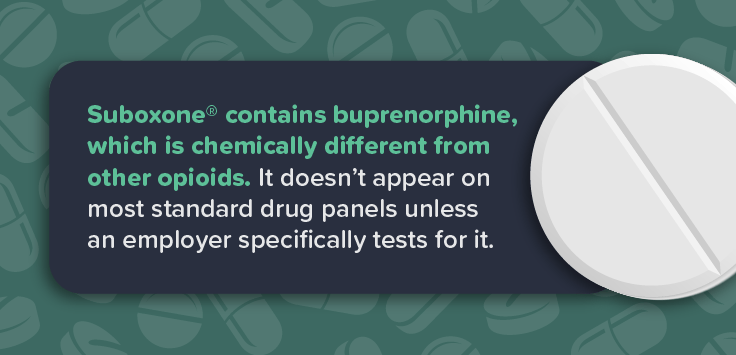
Suboxone® contains buprenorphine, which is chemically different from other opioids. It doesn’t appear on most standard drug panels unless an employer specifically tests for it.
What Most Employers Test For: The 5-Panel Standard
The most common workplace drug screen is the five-panel test. It focuses on substances commonly associated with impairment or illicit use.
A typical five-panel test screens for:
- Opiates/Opioids (such as morphine, heroin, or codeine)
- Marijuana
- Amphetamines
- PCP
- Cocaine
Buprenorphine is not included in this panel.
When Suboxone® May Be Flagged
Expanded panels exist and are usually reserved for safety-sensitive roles or regulated industries. These tests may include additional prescription medications or substances.
A twelve-panel test is one of the few standard panels that includes buprenorphine, though it is far less common and typically reserved for specific legal or regulatory contexts.
Detection windows for how long Buprenorphine remains in your system and shows up in tests vary depending on the test type, individual metabolism, and laboratory protocols. Rather than focusing on timelines, it’s more accurate to understand that Suboxone® is only identified when a test is designed to look for it.
The Strategy: To Disclose or Not to Disclose?
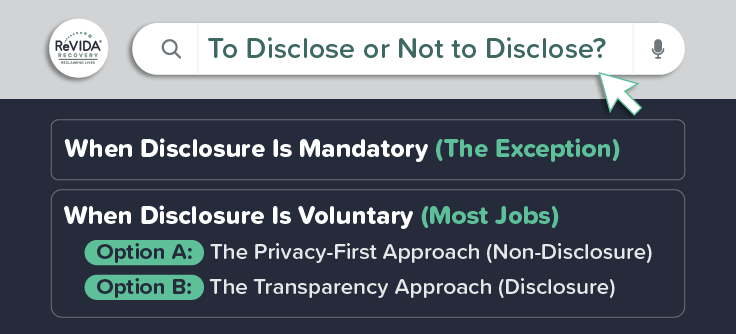
Deciding whether to tell an employer about your medication is usually a personal choice, but in certain industries, it is a regulatory requirement. Before choosing a strategy, you must determine if the job is “Safety-Sensitive” or governed by federal agencies like the Department of Transportation (DOT).
1. When Disclosure Is Mandatory (The Exception)
If you’re applying for a job that involves public safety or heavy machinery, you generally can’t use the “Don’t Ask, Don’t Tell” approach.
- Who this applies to: Commercial drivers (CDL), pilots (FAA), heavy equipment operators, armed security, and nuclear power workers.
- The Rule: Federal regulations typically require you to disclose all medications that could affect safety during your medical certification exam.
- Who you tell: You typically disclose this to the Medical Examiner during your physical, not the hiring manager during your interview.
- The Risk of Hiding It: Failing to disclose a prescription on a federal medical form can be considered fraud. If an accident occurs and undisclosed medication is found in your system, you could face severe legal and financial liability.
2. When Disclosure Is Voluntary (Most Jobs)
For roles in offices, retail, food service, hospitality, or general labor, you are not legally required to volunteer your medical history.
Option A: The Privacy-First Approach (Non-Disclosure)
- Best for: Standard corporate, retail, technical, or service roles.
- The Mindset: Suboxone® is a private medication, similar to insulin or antidepressants.
- How it works: You do not mention recovery or medication during the interview. If a drug test flags the medication, the Medical Review Officer (from the lab) will contact you privately to verify your prescription. Once verified, the result is reported to the employer as a “pass,” usually without listing the specific medication.
Option B: The Transparency Approach (Disclosure)
- Best for: Addiction treatment centers, social work, peer support, or highly progressive organizations.
- The Mindset: Your “lived experience” with recovery is a professional asset.
- How it works: You frame your recovery as a strength (resilience, empathy) during the interview. This builds trust but carries the risk of stigma if the employer is not educated on addiction.
If you drive a truck, fly a plane, or operate a crane: You must disclose it to the Medical Examiner and have documentation ready. If you work at a desk, a counter, or a computer: You have the right to privacy. Choose the path that makes you feel most secure.
Recovery-Friendly Industries Most Likely to Hire People On Suboxone
Understanding which industries are naturally more supportive can help you target your job search toward environments where your recovery is either seen as an asset or is simply treated as private medical information.
Green Flag Industries
Some employers are more open due to their mission, high labor demand, or a performance-focused culture that prioritizes output over personal history. Following are some of the niches considered “Green flag industries” for people in recovery.
Behavioral Health and Addiction Treatment: These organizations often value “lived experience” and may view your recovery journey as a professional qualification for roles like peer support or case management.
Nonprofit and Community Outreach: Mission-driven organizations focused on social services often have “second-chance” hiring policies and a high degree of empathy for those navigating health journeys.
Hospitality and Food Service: This industry is known for its pragmatism and focus on immediate skill. While the environment can be high-pressure, it is traditionally one of the most accessible for those rebuilding their careers.
Skilled Trades (Residential): Residential construction, plumbing, HVAC, and landscaping are often in high demand for reliable workers. Unlike large commercial sites, these roles often have fewer layers of regulatory testing.
Tech, Creative, and Remote-First Fields: These industries are intensely “output-focused.” If you can code, design, or write effectively, your medical history is generally considered irrelevant to your job performance.
Yellow Flag Industries
Some fields may appear welcoming at first but carry hidden risks, particularly regarding insurance liabilities and post-incident protocols.
Work that’s often considered a “yellow flag industry” might include any of the below.
Warehousing and Logistics: While many warehouses hire quickly, they often have strict “post-accident” testing policies. If even a minor incident occurs—such as a bumped shelf—a drug screen that includes buprenorphine could create a liability issue depending on the company’s specific safety policy.
Heavily Regulated Construction: Large-scale commercial projects or union roles often require “safety clearance.” Even if you are legally protected, the paperwork required to prove you are not “impaired” by your medication can be a significant administrative hurdle.
Healthcare and Nursing: This may seem counterintuitive, but clinical environments are often the most strictly monitored. While you cannot be denied a license solely for being in recovery, nurses and clinical staff often face rigorous “fitness for duty” evaluations and may be subject to stricter, expanded drug panels (like the 12-panel) to prevent medication diversion.
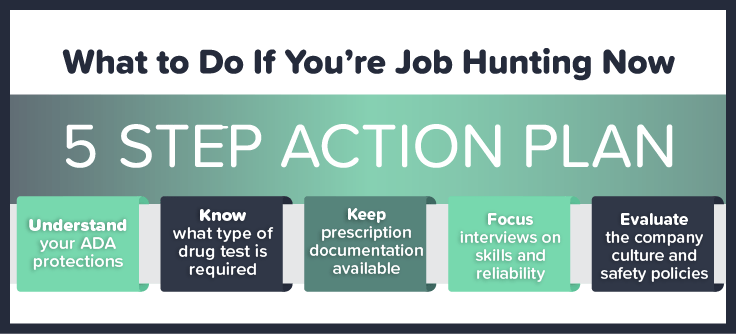
What to Do If You’re Job Hunting Now: 5-Step Action Plan
If you’re receiving Suboxone® and looking for work, taking these five steps can help reduce anxiety about finding an employer willing to hire you.
- Understand your ADA protections
- Know what type of drug test is required
- Keep prescription documentation available
- Focus interviews on skills and reliability
- Evaluate the company culture and safety policies
Employment and recovery can move forward together with the right planning and support.
Getting Treatment for Opioid Use Disorder in Tennessee and Virginia
Finding employment while navigating recovery can feel overwhelming, but it’s not something patients have to manage alone.
ReVIDA® Recovery provides flexible MAT care designed to support stability in real life, including work and family responsibilities. With locations across East Tennessee and Southwest Virginia, patients receive focused opioid use disorder treatment that integrates accountability, structure, and practical support. For more information, call (844) 972-4673 today.
Reclaim Your Life.